
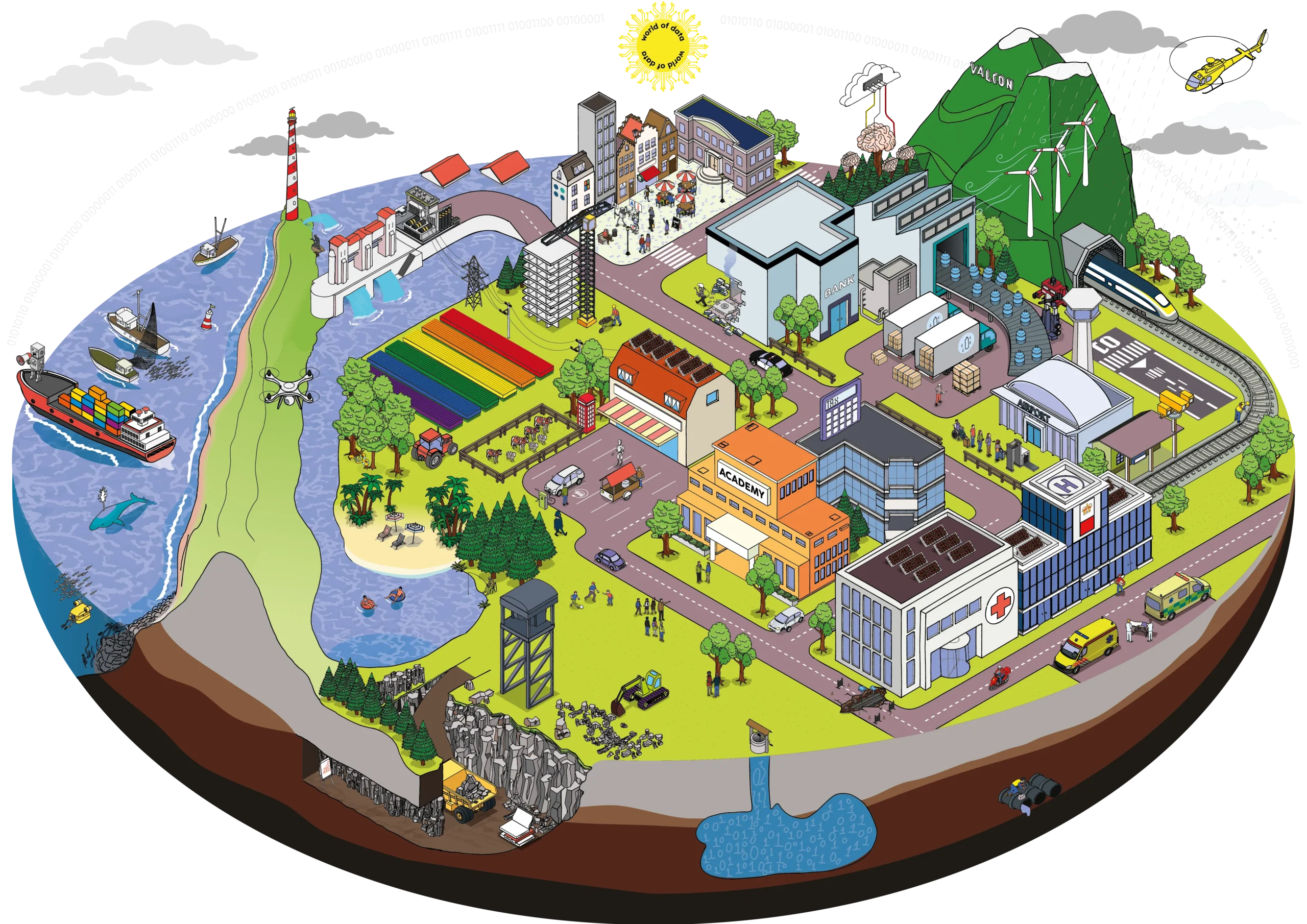

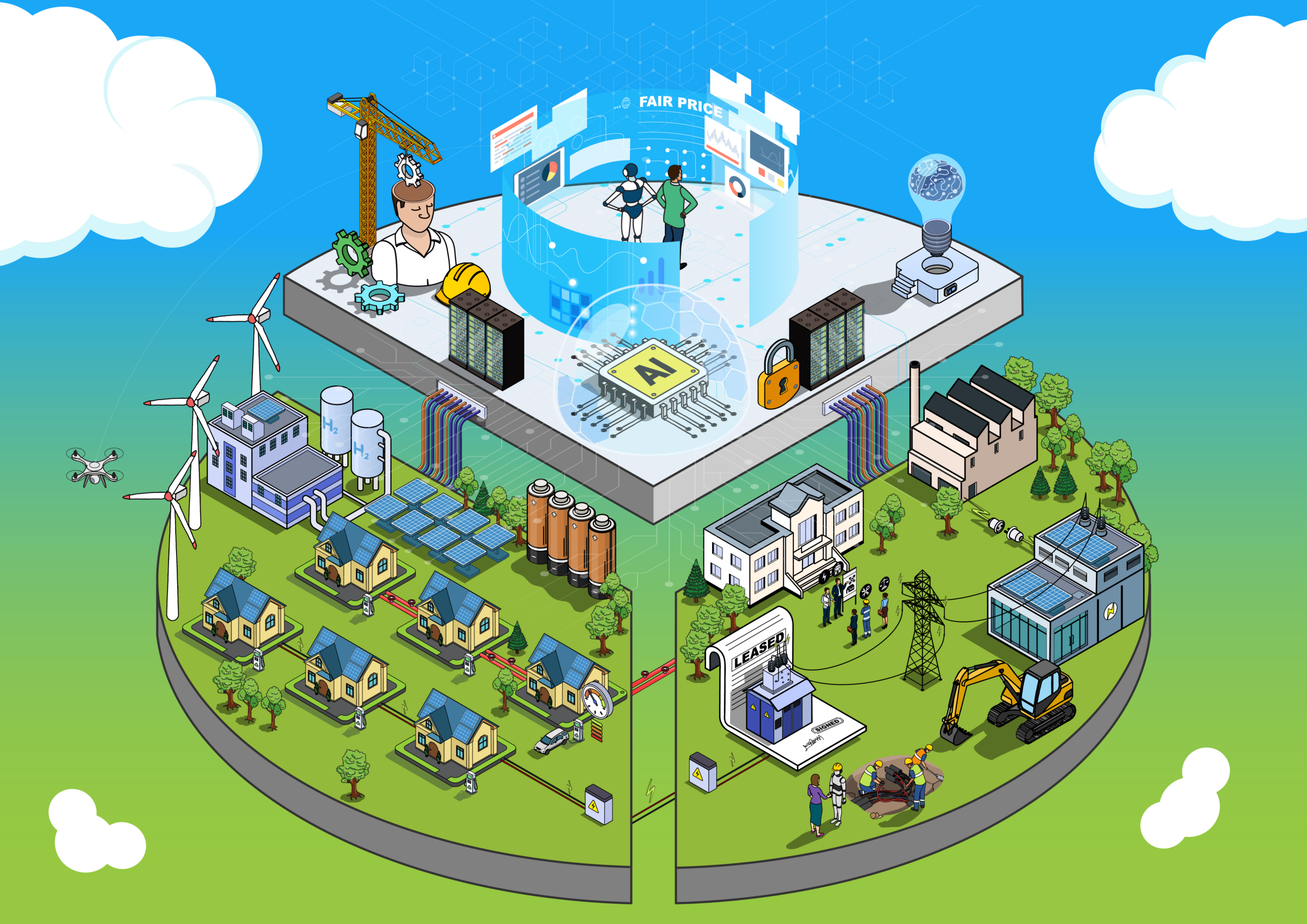







In the last ten years, data has become the new currency. So building a strong data foundation – in this era of data-driven insights and AI – has become more important than ever. But before organisations get to this point and start to benefit from these new technologies, they usually have to overcome a number of data challenges.
Most organisations have collected large volumes of data, adopted data platforms and hired data specialists. They believe they are on the right track with data- and AI-driven decision-making, but they struggle when they need to translate data into timely, reliable and auditable reporting. Because how can you trust the outcomes if you cannot understand where the data came from? Producing reliable insights still requires significant manual effort, reconciliations and project-based interventions, at high costs. At the same time, it’s common for employees to develop resistance towards working with data, because their access to it or their ability to interpret it isn’t easy. And the cause is often the same: departments that are working in siloes and data specialists lacking required business understanding.
The missing link is a strong data modelling and analytics capability that connects processes, people and technology. Modelling and analytics experts are a package deal of data scientists, data engineers and data insights specialists with business understanding: a combination of skills crucial to interpret data in the right context. They take hold of the raw data and transform it into structured and reliable information, bridging the gap between data collection and value extraction. To do this, they design robust data architecture, implement consistent data modelling and build unified information management systems.
Organisations that embed data modelling and analytics as a core capability reap the benefits: data becomes accessible, trusted and integrated into daily decision-making, fostering a data-driven culture. This exposes operational inefficiencies, enables cost savings and can have a strong positive impact on profitability and EBITDA over time.
The best way to illustrate data modelling and analytics is to show it in action. So here are three examples of how Valcon’s data modelling and analytics team have helped different organisations to build strong data foundations:
KYC remediation at a major Dutch bank
In recent years, Dutch banks have faced fines of up to 800 million euros for failing to comply with Know Your Customer (KYC) and Anti-Money Laundering (Wwft) regulations. To comply with this regulation, our client faced the daunting task of remediating millions of client records.
The initial project was to create a remediation tool for analysts, but it quickly became clear the real challenge was data orchestration. Multiple remediation flows already existed across the bank, but client records needed to be routed to the correct process while maintaining oversight.
This is where modelling and analytics made the difference. The team developed a tool that enables the bank to route clients to the right remediation flows; it centralises business rules and ensures every decision is fully auditable. Analysts are able to manually intervene where necessary, and the leadership team can monitor progress through advanced analytics dashboards.
Although the program will continue over the next few years, there have already been some significant benefits. There is now faster onboarding of new remediation flows, real-time visibility of program scope and team throughput, and there is also audit and change tracking, which is important for regulatory transparency. This project demonstrates that modelling and analytics isn’t just about process automation – it is about embedding data-driven intelligence at the core of operational programs.
Data standardisation in the construction industry
We work with a large construction company, which specialises in incident management and maintenance. The firm was facing a critical data challenge: fragmented and inconsistent asset data, which was undermining its operational effectiveness. The business had grown through making multiple acquisitions – each company brought its own systems, processes and working methods, which had created a complex patchwork of data management approaches.
The data fragmentation was also a product of the company’s culture. The multiple businesses the company had acquired tended to act as silos. With regards to data, these legacy businesses had developed their own logic and business rules. As a result, these silos prevented leadership from gaining a clear view of the organisation’s performance.
Valcon designed a centrally integrated data layer that standardised, cleaned and connected data across systems. Equally important was shifting the company’s mindset towards unified working methods and an alignment of business processes. By establishing a centrally governed data model, we created a single source of truth, which improved data quality and governance and made data insights more reliable. The organisation is now well positioned to leverage advanced analytics, AI and machine learning. The focus has shifted from reactive asset management to predictive maintenance, which means the business is well prepared and doesn’t have to firefight data problems. The project shows how data modelling can be used as a catalyst for data-driven decision-making.
Infrastructure and incident management
One of the Netherlands’ main railway infrastructure businesses needed to improve its incident management system by integrating advanced analytics into its operational processes. They wanted to automate data analysis to improve response times and make it easier for the organisation to monitor issues without individual teams having to create their own analyses.
The company realised that its data platform had to be restructured before any advanced analytics solution could be implemented. The design also had to take complex structured and unstructured data sources into account.
One of the main challenges was figuring out how to work with the data using existing business logic. This needed Valcon’s expertise to redesign how data was managed, engineered and how it was made available. Valcon has since helped the company’s data landscape evolve to introduce predictive modelling and forecasting.
So whether it’s in banking, construction, infrastructure or any other industry, the same principles apply. The key success factor in all these cases is that we actively help organisations to dissolve siloes and make connections between processes, people and technology. This sounds easy, but it’s one of the most important and complex tasks in (growing) organisations. Modelling and analytics are about more than generating insights – it’s the method by which you create a crucial data foundation needed to embed intelligence directly into operations. With robust data models, reliable workflows and scalable analytics, organisations can adapt faster, stay compliant and make smarter decisions. The endgame? Unlocking faster, confident, data-driven decision-making for the whole organisation and taking data science to the next level.
If you would like to talk to Valcon about how data modelling and analytics techniques could build a strong data foundation at your organisation, please get in touch with [email protected] or [email protected].